/
•7 min readBilingual Essay#Philosophy
Personality, Education, and Purpose: A Reckoning with Societal Scripts
On the fading illusions of youth, the systemic shortcomings of rote schooling, the quiet perils of conventional parenting, and the lifelong stakes of choosing self-reliance over conformity.
Core Thesis“It is infinitely better to err upon a decision forged by one’s own conscience and inquiry than to follow the herd blindly.”
0% read
Contents
5 sections01/Section
The Shattering of Illusions & The Call to Self-Reliance
Personality, education, and the purpose of life: these are intricate subjects. Perhaps we encountered them in schoolbooks, yet outside the confines of exams and textbooks, they are rarely contemplated – until the colorful, dreamlike illusions of youth fall away and the heavy mantle of responsibility settles upon one’s shoulders.
Speak of these questions with your peers, and they will likely shout – "Pull your head out of those books! Who wants all this endless studying and somber talk? Go live a little and enjoy life!"
Turn to elders, and they will offer traditional counsel – "Study diligently; through this, all knowledge will come. You will secure a lucrative job, become a doctor or an engineer, and only then will you be successful and virtuous."
They pass down unconditionally the exact advice they inherited from their own parents and predecessors, regardless of whether that advice ever brought meaningful fulfillment to their own lives. Acquire an education, they say, yet the true substance of learning remains hollow in practice.
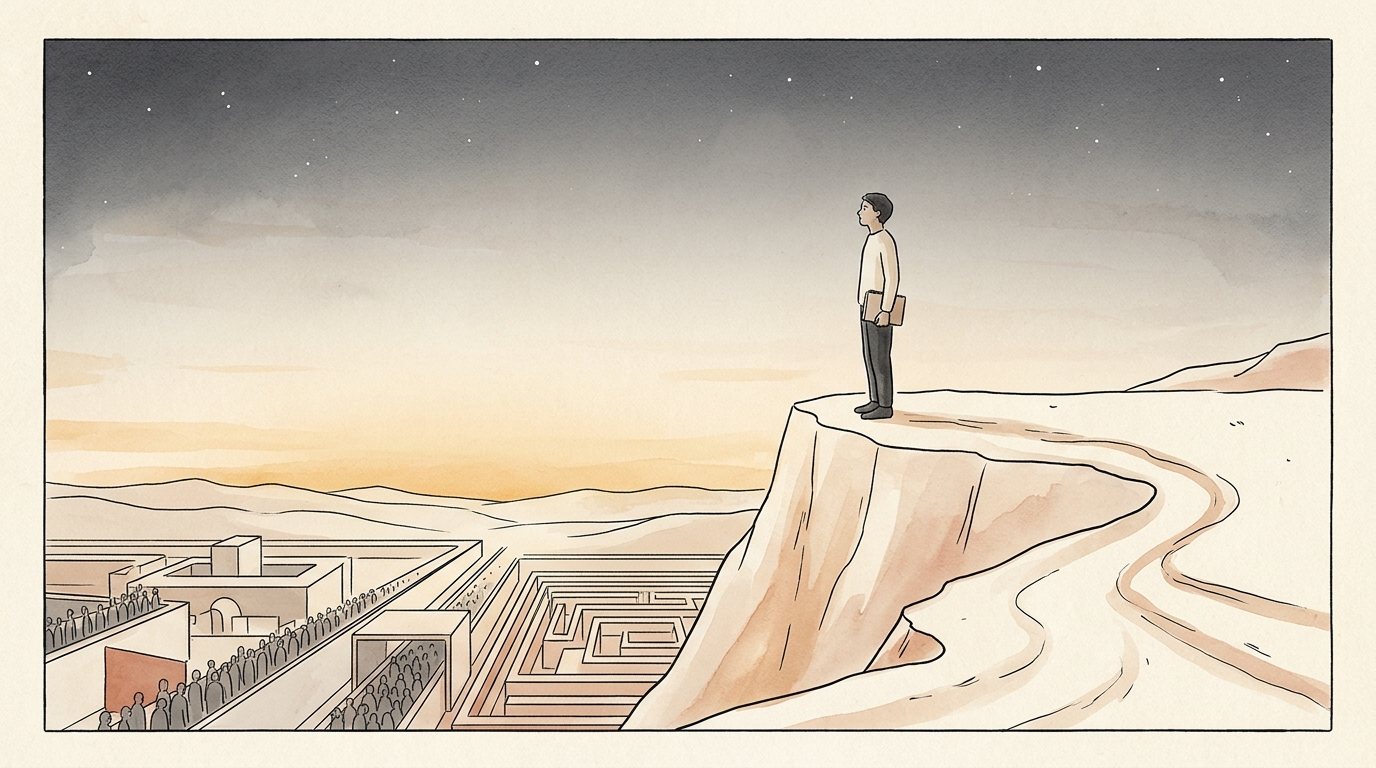
When one searches from door to door and finds no authentic guidance, self-reliance becomes the only recourse. One is forced to judge and decide for oneself. Discerning truth from error becomes one's own perilous responsibility. Failing that, one must simply drift with the current like the majority – a current that, more often than not, casts the swimmer into fathomless open waters. One must accept whatever everyone else is doing and prescribing, and bear the consequences for a lifetime.
It is infinitely better to err upon a decision forged by one’s own conscience and inquiry than to follow the herd blindly.
Yet human beings are born utterly helpless, devoid of mature judgment. A succession of environmental forces subsequently molds them and makes life’s choices on their behalf. Only the deliberate cultivation of self-education or the presence of genuine guidance from these forces can rescue us, giving clarity to our aims and navigating us to our destination.
02/Section
The Architecture of Personality & The Parenting Crisis
Personality is the outward expression of a human being’s inner thoughts and actions. In simple terms, it manifests through our mindset, character, virtues, skills, and daily conduct. Everything that touches a person’s existence leaves its mark upon their personality; it is the very definition of who we are.
Consciously or unconsciously, the fundamental motive behind our every endeavor is the preservation of our own existence. Personality is how that existence is projected into the world. Hence, throughout life, an individual constantly strives to elevate the stature of their personality, seeking to make it influential among peers. The financial value of personality brings wealth, while its social and ethical value commands respect. An influential personality preserves a person’s presence in the world far beyond their years.
A child's personality begins to take shape from the very moment of birth. In the years that follow, family, society, culture, faith, institutions, peers, and surroundings converge to mold who they become. When the child gradually develops reason, the impressions of these formative forces reveal themselves in their choices.
At birth, a human infant is at the absolute peak of helplessness. In that vulnerable state, nature’s greatest gift stands beside them: parents. The unconditional devotion that a creator has instilled in parents for their offspring is unrivaled anywhere in nature. The family and the parents are without question the most potent influence upon a human life. If their guidance is sound, few external forces can shake the child’s moral foundation.
Yet here lies an immense dilemma – particularly in our developing societies, where parents are often completely unversed in the psychology of conscious parenting. Traditionally, they merely reproduce what they witnessed and experienced in their own childhoods. Consequently, an inheritance of outdated conventions, superstitions, and assumptions ill-suited for a changing world casts a damaging shadow across their children’s upbringing.
If parents genuinely desire to raise capable human beings, they must study the art of parenting: read, attend workshops, seek contemporary knowledge. Yet theoretical study alone is insufficient; every child is unique, and no single formula works universally. What is required is adaptive problem-solving: parents must uncover or forge the right approach for each child.
In our society, the conventional notion of parenting reduces to: provide basic necessities, enforce strict discipline, and dispatch the child to school – hoping the school will return an extraordinary human being. That expectation is nothing short of a fantasy. A child must receive all foundational human knowledge within the home: character, empathy, ethical discernment, cognitive maturity, language, manners, elementary arithmetic, and healthy habits. If the foundation is brittle, no external institution can elevate the person. A child becomes what parents cultivate; what is missing is simply the knowledge of how to build.
When parents dismiss errors and obstinacy as mere "childish antics," failing to correct behaviors they would never tolerate in an adult, reassuring themselves that age will magically resolve it – they are pouring fuel onto an open fire. That fire will consume everything before it dies down, and no later harshness will reverse it. Every misstep must be corrected with patient reason.
Children must be nurtured such that a calm, unwavering "No" from a parent carries more authority than the harshest punishment.
One must guard not merely physical growth, but emotional and psychological maturity. A child must feel unreservedly safe to discuss everything with their parents; without that trust, crucial parts of their inner life will remain hidden in darkness.
Eventually, a stage arrives when youth encounter questions they hesitate to voice openly with family. Inevitably, they will turn to peers and associates with whom they feel comfortable. Yet those sources often dispense distorted information that can corrupt judgment. Therefore, youth must be fortified early with discernment so they can independently distinguish truth from deception. Parents must remain watchful observers of who their children spend time with and what ideas they absorb.
Children become what parents model, explain, and embody; they form their personalities through observation and subconscious absorption. Hence, a harmonious domestic environment is indispensable; marital strife inflicts the deepest wounds on a child’s psyche. A child who is chronically isolated will become intensely introverted, shrinking from society and community; conversely, one given unchecked license outside will become excessively restless and unfocused. Nurturing a resilient balance between introversion and extroversion is paramount – it governs both personal mastery and social fulfillment.
Fundamentally, parents must cultivate themselves into living ideals for their children. They must modernize their own perspectives and raise their offspring in light of those ideals. One must first confront one’s own ignorance and mistakes, seeking the highest possible standards for one's children in the present era. In parenting, both the total absence of discipline and ruthless excess are equally destructive.
03/Section
The Crisis of Rote Education & The Dopamine Trap
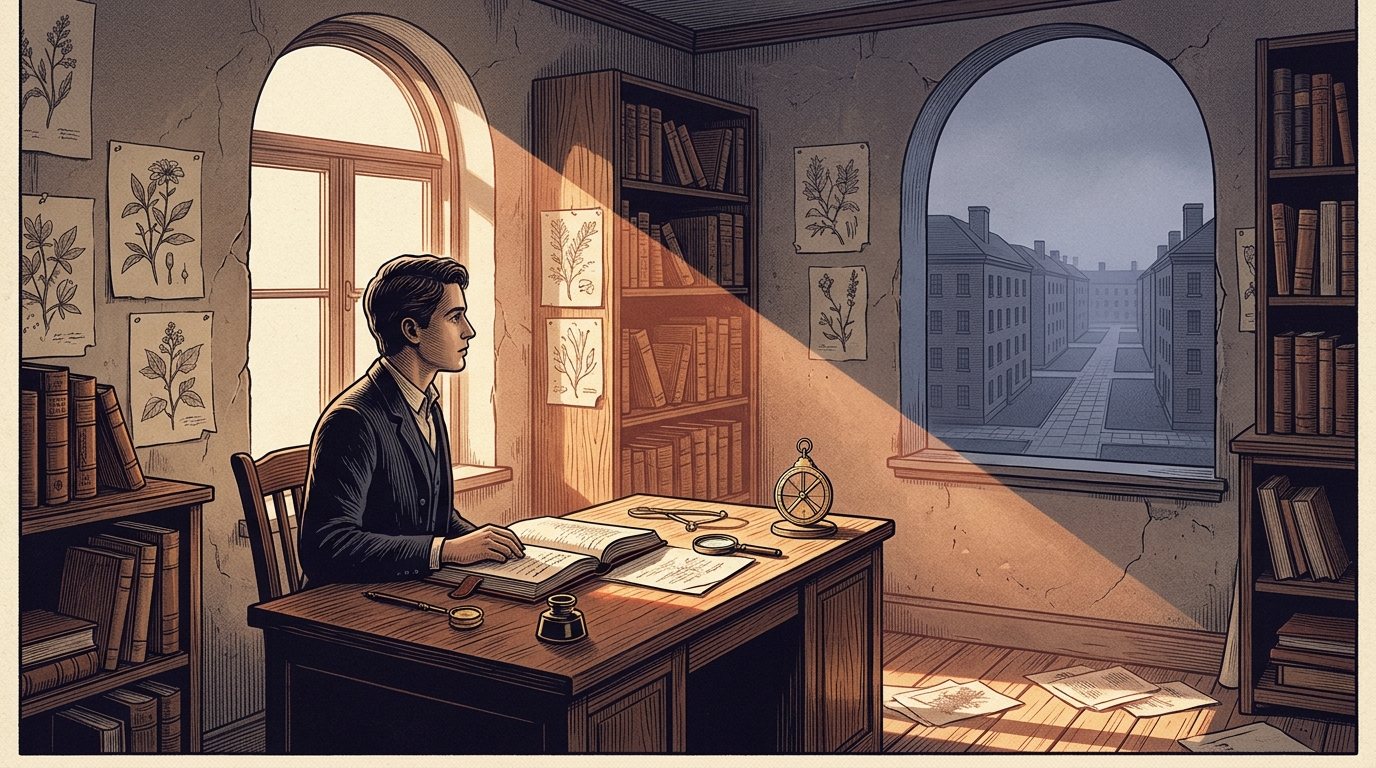
Parents frequently feel a sense of relief upon sending their children to school, harboring an earnest conviction that the academy will mold them into exemplary individuals. In our contemporary educational framework, however, expecting this is as naive as trying to learn how to swim solely by reading a book.
Our education system is overwhelmingly theoretical and textbook-centric. Often, parents send their children to school with barely a rudimentary grasp of the alphabet. The teacher’s primary task then becomes teaching basic literacy – writing, reading, comprehension. Yet how can a single instructor accomplish this when facing fifty to a hundred students in a classroom?
This responsibility belongs squarely to the home: making the child fluent in language, comfortable with basic numeracy, and holding back formal schooling until cognitive readiness is genuine. Only the family can offer this intimate, individualized foundation. Children whose parents step forward with this early groundwork invariably outpace their peers throughout conventional schooling. While learning capacity varies, it deepens through practice; conversely, those whose foundation is neglected inevitably witness their entire academic scaffolding collapse. Unless these foundational issues are addressed at home, even the most prestigious education system will yield no true progress.
The most persistent grievance voiced by parents and educators is that students are inattentive and unenthusiastic about their studies. The plainest explanation is this: studying, as presently structured, is tedious and devoid of intrinsic joy.
Human effort and learning are governed by the brain’s neurochemical reward and penalty system. When our brain recognizes an activity as advantageous and pleasurable, it releases dopamine, generating satisfaction and engagement. Conversely, perceived drudgery and stress trigger negative feedback. Thus, we gravitate naturally toward what feels rewarding and instinctively avoid what causes distress. When we achieve something through hard struggle, we savor a profound sense of triumph.
Yet, being intelligent creatures, we have learned to outwit our own biology, discovering shortcuts that deliver effortless stimulation without the ordeal of rigorous discipline. When instant gratification is available, the mind resists strenuous work. This is the exact mechanism underlying chemical addiction: intense pleasure obtained without constructive labor. In theory, acquiring novel knowledge should release dopamine, making learning deeply satisfying. In reality, the opposite occurs.
Under the current paradigm, experiencing joy through study demands enormous exertion – weighed down by fear of exam results, terror of failure, and family castigation. Meanwhile, countless frictionless avenues of stimulation surround modern youth: gaming, cinema, social media, smartphones, and screens. Our generation’s pervasive distraction is a direct consequence of this imbalance.
There are only two possible remedies: either eradicate all competing forms of pleasure, or transform learning into something genuinely engaging and rewarding. Eradicating technology is impossible; therefore, education itself must become compelling. Skeptics may counter: "Why coddle them? Success demands suffering." Yet the sole incentive dangled before students is the abstract promise of a lucrative career in a distant future. A child cannot fathom the significance of a professional career until they face real-world survival; and family castigation is hardly an inspiring muse. It is like placing a feast before a starving person and telling them that if they refuse to eat, they might starve.
Today’s parents were once students themselves, and it is doubtful that rote memorization brought them much joy either; they simply possessed fewer alternative distractions, which made enduring the monotony slightly more tolerable. Today, the landscape has radically shifted. Technology has evolved and alternative avenues of engagement have multiplied, yet the classroom remains frozen in time.
Education must first become applied and inquiry-based. Rote theory must yield to real-world problem solving, and economic literacy must be treated as essential. We study ostensibly to build a livelihood, yet practical financial literacy is virtually excluded from the syllabus. We spend lifetimes illiterate in the management of wealth, suffering preventable financial instability.
Furthermore, modern multimedia tools, hands-on experimentation, and collaborative movements like Scouting must be woven into the fabric of daily schooling. A robust foundational literacy coupled with an inspiring, joy-driven learning framework can carry an individual toward their true purpose.
04/Section
The Discovery of Purpose & The Cultivation of Talent
The concept of "Life’s Purpose" first enters conscious thought in the classroom, when students are tasked with writing an essay on "My Aim in Life." Naturally, we regurgitate whatever the standard text dictates. Invariably, it prescribes becoming a doctor to serve humanity. We know nothing of other vocations, nor do we possess the independent maturity to articulate an authentic longing; rarely does anyone hold meaningful conversations with children on these questions.
As we grow, we learn of scientists, engineers, and pilots. Some dreams shift; others cling to medicine. If questioned, most cannot explain their choice; an answer is offered simply to satisfy the interrogator, and it must invariably conform to societal prestige. When the milestone of selecting an academic discipline arrives, confusion persists. The overwhelming majority defaults to the Science stream – simply because society expects it, peers pursue it, and high grades permit it. Moreover, the most lucrative careers are perceived to reside there.
Yet only a fortunate fraction reaches their true mark. Some come to love their craft; others find themselves stranded in professions they genuinely detest, having journeyed too far along the path to turn back. They spend a lifetime waging an exhausting internal war against their daily work. No matter what rank or fortune they achieve, deep within, they can never genuinely proclaim: "I am fulfilled."
Defining life’s purpose is a monumental undertaking, demanding deep self-examination. While children do not all arrive in the world with fully awakened gifts, a rare few possess distinct innate predispositions. The solemn duty of parents is to cultivate those predispositions and guide them toward a purposeful trajectory; for those whose gifts remain latent, the task is patient discovery.
If parents harbor an aspiration for their child, they may certainly seek to cultivate it – but the child’s innate curiosity must always be honored first. Whatever pursuit a young person is genuinely inspired toward in early years, they will cherish for life, dedicating their finest energies toward mastering it.
As travelers navigating this life, discovering purpose requires cultivating curiosity across diverse domains. Once an authentic resonance is found, one must pursue excellence in that craft. We must cultivate a crystal-clear understanding of our path: what is required, and what uniqueness distinguishes our pilgrimage from the crowd. That deliberate distinction is what gives weight to our journey.
Obstacles will inevitably mount, and one must stand prepared to confront them. Parents worry for us more deeply than anyone; they may hold alternative hopes for our lives, yet when spoken to with patience and maturity, they will ultimately embrace what brings us genuine fulfillment and well-being.
Material wealth must never be our sole guiding star; our presence upon this earth should leave a meaningful imprint of positive change.
05/Section
Conformity, Criticism, and the Value of Personality
Even when subjected to identical environmental pressures, human personalities often develop in vastly divergent ways. Exceptional character can emerge even from adverse surroundings, though such instances remain rare; most individuals capitulate first to their own self-doubt.
Moreover, every society is populated by critics and cynics. Societal norms inherently constrain us, for social cohesion is built on groups of individuals adhering to established scripts. When someone dares to pioneer something novel or ventures outside accepted paradigms, the collective instinctively brands them as eccentric or dangerous.
When an individual diverges in physical, mental, or professional expression, society often seeks to alienate them. In this crucible, many noble and creative endeavors perish alongside the misguided ones.
Yet if we steadfastly cultivate our personality into something of undeniable value and integrity, we will ultimately prevail.
Dialogue & Peer Review
Questions, counter-arguments, and shared observations on this inquiry.
2 THREADS & REPLIES
Abid
সেরা ভাই, আরো চাই
Sintaul Mahdi SiamAuthor
Ofcourse
Send a Private Note
Prefer a direct personal line instead of public discussion? Letters go straight to Siam’s inbox.